Hello Pipe Enthusiasts!
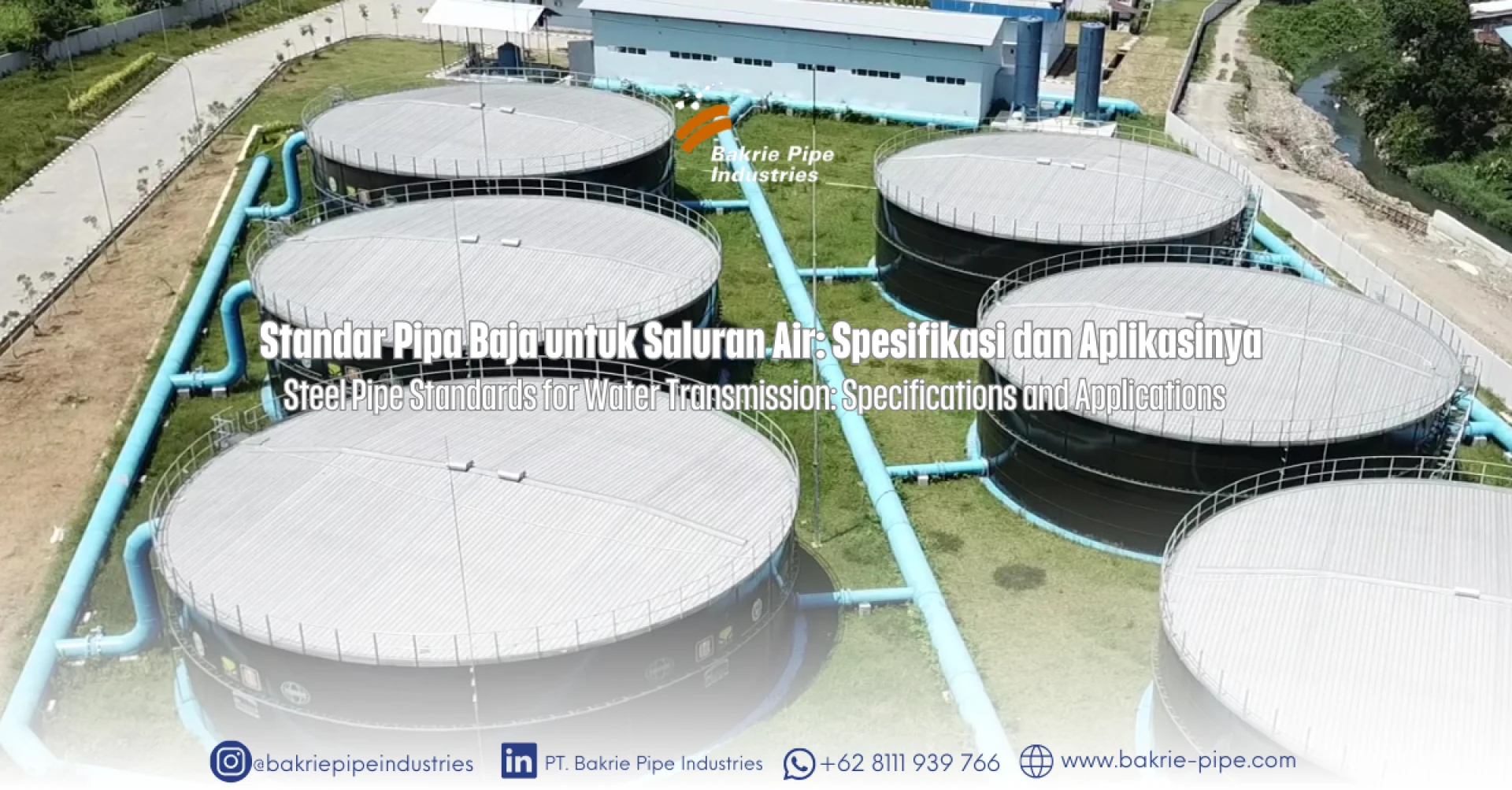
Welcome back to the #BPIPipeInsights! article to broaden your knowledge about steel pipe products. This time we will discuss important standards used in water transmission systems, both in Indonesia and internationally. What are the steel pipe specifications standards used for water transmission? Steel pipe standards for water transmission are very important because they ensure product quality, safety, and durability in the long term. With these standards, contractors, engineers, and project owners can select steel pipes that meet their needs in terms of size, thickness, and production methods.
Here are the commonly used steel pipe standards for water transmission:
SNI 39:2024
SNI 39:2024 is the latest Indonesian National Standard covering steel pipes for gas and water installations, with an outer diameter range from ½ inch to 80 inch and different thickness ranges for each class. SNI 39:2024 Light class has a thickness range of 2.0 mm to 14.3 mm, Medium class has a thickness range of 2.6 mm to 15.9 mm, and Heavy class has a thickness range of 2.8 mm to 19.1 mm. Steel pipes under SNI 39:2024 are available with two welding methods: Electric Resistance Welding (ERW) and Submerged Arc Welding, with longitudinal or helical seams.
ASTM A139
ASTM A139 is an international standard issued by the American Society for Testing and Materials (ASTM International) for steel pipes manufactured by electric-fusion (arc)-welding with diameters of NPS 4 inch and larger, available in longitudinal or spiral seams, with wall thickness up to 25.4 mm (1 inch). These pipes are used for water transmission, gas, low to medium pressure steam, as well as structural and piling applications. ASTM A139 is available in five grades: Grade A, Grade B, Grade C, Grade D, and Grade E, with increasing mechanical requirements or adjusted compositions for specific applications in each grade.
AWWA C200
AWWA C200 is an international standard from the American Water Works Association (AWWA) for steel water pipes with diameters of 6 inch (150 mm) and larger. This standard covers steel pipes manufactured by ERW (Electric Resistance Welded) or SAW (Submerged Arc Welded), with longitudinal or spiral seams. Steel pipes under AWWA C200 are widely used in municipal water distribution systems, dams, water transmission lines, and large civil projects requiring large-diameter pipes with high durability.
ASTM A53-A
ASTM A53-A is an international standard from ASTM International for carbon steel pipes produced by welded (ERW or furnace-butt welded) or seamless methods. This standard is widely used for water, gas, low-pressure steam, as well as light mechanical and structural applications, with diameters ranging from ½ inch to 26 inch and thickness varying according to schedule. Another grade of ASTM A53 is Grade B, but for water transmission applications ASTM A53-A is commonly used. This standard complements ASTM A139 (large-diameter steel pipes).
UL 852
In this article we also include UL 852 Metallic Sprinkler Pipe, which is the standard governing steel pipes used in sprinkler and standpipe systems (vertical pipes for fire protection). UL (Underwriters Laboratories) is an international certification body focusing on product safety. For steel pipes used in water transmission systems and building installations, UL standards provide additional testing related to safety, quality, and regulatory compliance. UL 852 steel pipes used in metallic sprinkler systems are usually manufactured according to ASTM A53-A (or ASTM A53-B for higher pressure), and after meeting ASTM specifications, the products are certified under UL 852 to be suitable for use.
Conclusion
By understanding various standards such as SNI 39:2024, ASTM A139, AWWA C200, ASTM A53-A, and UL 852, we can ensure that the selection of steel pipes for water transmission not only meets technical requirements but also guarantees quality, safety, and long-term durability.
In addition, there are other standards such as ASTM A795, ASTM A672, and ASTM A671 that can be used for water channels in certain conditions or projects. However, since these products are relatively rare in the Indonesian market and usually require special orders from BPI, further discussion is not included in this article.
Bakrie Pipe Industries consistently delivers steel pipe products that comply with these standards, supporting the development of safe, efficient, and sustainable water infrastructure.
See you in the next #BPIPipeInsights! article, stay tuned for the latest information about steel pipes and their applications. If you need steel pipes for water transmission according to the standards mentioned in this article, do not hesitate to contact us. Our Marketing and Sales team is ready to assist your needs.